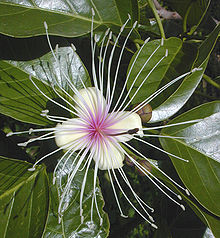
Flowers within art are also representative of the female genitalia,[30] as seen in the works of artists such as Georgia O'Keeffe, Imogen Cunningham, Veronica Ruiz de Velasco, and Judy Chicago, and in fact in Asian and western classical art. Many cultures around the world have a marked tendency to associate flowers with femininity.
The great variety of delicate and beautiful flowers has inspired the works of numerous poets, especially from the 18th-19th centuryRomantic era. Famous examples include William Wordsworth's I Wandered Lonely as a Cloud and William Blake's Ah! Sun-Flower.
Because of their varied and colorful appearance, flowers have long been a favorite subject of visual artists as well. Some of the most celebrated paintings from well-known painters are of flowers, such as Van Gogh's sunflowers series or Monet's water lilies. Flowers are also dried, freeze dried and pressed in order to create permanent, three-dimensional pieces of flower art.
Their symbolism in dreams has also been discussed, with possible interpretations including "blossoming potential".[31]
The Roman goddess of flowers, gardens, and the season of Spring is Flora. The Greek goddess of spring, flowers and nature is Chloris.
In Hindu mythology, flowers have a significant status. Vishnu, one of the three major gods in the Hindu system, is often depicted standing straight on a lotus flower.[32] Apart from the association with Vishnu, the Hindu tradition also considers the lotus to have spiritual significance.[33] For example, it figures in the Hindu stories of creation.[34]

Pollination


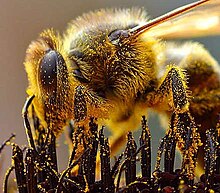
The primary purpose of a flower is reproduction. Since the flowers are the reproductive organs of plant, they mediate the joining of the sperm, contained within pollen, to the ovules — contained in the ovary. Pollination is the movement of pollen from the anthers to the stigma. The joining of the sperm to the ovules is called fertilization. Normally pollen is moved from one plant to another, but many plants are able to self pollinate. The fertilized ovules produce seeds that are the next generation. Sexual reproduction produces genetically unique offspring, allowing for adaptation. Flowers have specific designs which encourages the transfer of pollen from one plant to another of the same species. Many plants are dependent upon external factors for pollination, including: wind and animals, and especially insects. Even large animals such as birds, bats, and pygmy possums can be employed. The period of time during which this process can take place (the flower is fully expanded and functional) is called anthesis. The study of pollination by insects is calledanthecology.

The principal purpose of a flower is the reproduction of the individual and the species. All flowering plants are heterosporous, producing two types of spores. Microspores are produced by meiosis inside anthers while megaspores are produced inside ovules, inside an ovary. In fact, anthers typically consist of four microsporangia and an ovule is an integumented megasporangium. Both types of spores develop into gametophytes inside sporangia. As with all heterosporous plants, the gametophytes also develop inside the spores (are endosporic).
In the majority of species, individual flowers have both functional carpels and stamens. Botanists describe these flowers as being perfector bisexual and the species as hermaphroditic. Some flowers lack one or the other reproductive organ and called imperfect or unisexual. If unisex flowers are found on the same individual plant but in different locations, the species is said to be monoecious. If each type of unisex flower is found only on separate individuals, the plant is dioecious.